
Google Product Manager interview questions offer a great opportunity to showcase your skills, especially when prepared with key concepts.
The most useful tip while preparing for Google’s product manager interviews is to know what type of questions can be asked. Majorly, an interviewer or a hiring manager would ask questions about product design cases, execution strategy, behavioral questions, and metrics estimation, and more.
However, product sense proficiency will not do alone if you want to join Google. You must also develop a strategic approach to solving tough interview questions.
The process of entering Google requires applicants to dedicate their efforts towards specific training activities. The company uses a specialized multi-dimensional interview process which assesses candidates based on their product sense and strategic thinking and analytical skills and their ability to fit into the company culture.
This guide provides all necessary information about Google’s job interviews including essential skills required, complete interview process and key interview questions which candidates need to master in order to secure job offers.
Key Takeaways
- Google Product Manager interviews evaluate actual product evaluation abilities through practical assessment methods instead of testing basic theoretical knowledge. The assessment will present actual user situations together with their associated metrics and decision-making procedures and organizational approaches.
- The Program Managers at Google operate at the juncture of engineering, design, and business, designing products used by billions.
- The core areas which need to be mastered include product design, estimation, metrics, strategy, execution, and behavioral storytelling which all need to be practiced according to Google’s values.
- The interview evaluates your ability to think systematically and your skills in making decisions through data analysis and your capacity to create results in uncertain situations.
What does a Google Product Manager do?
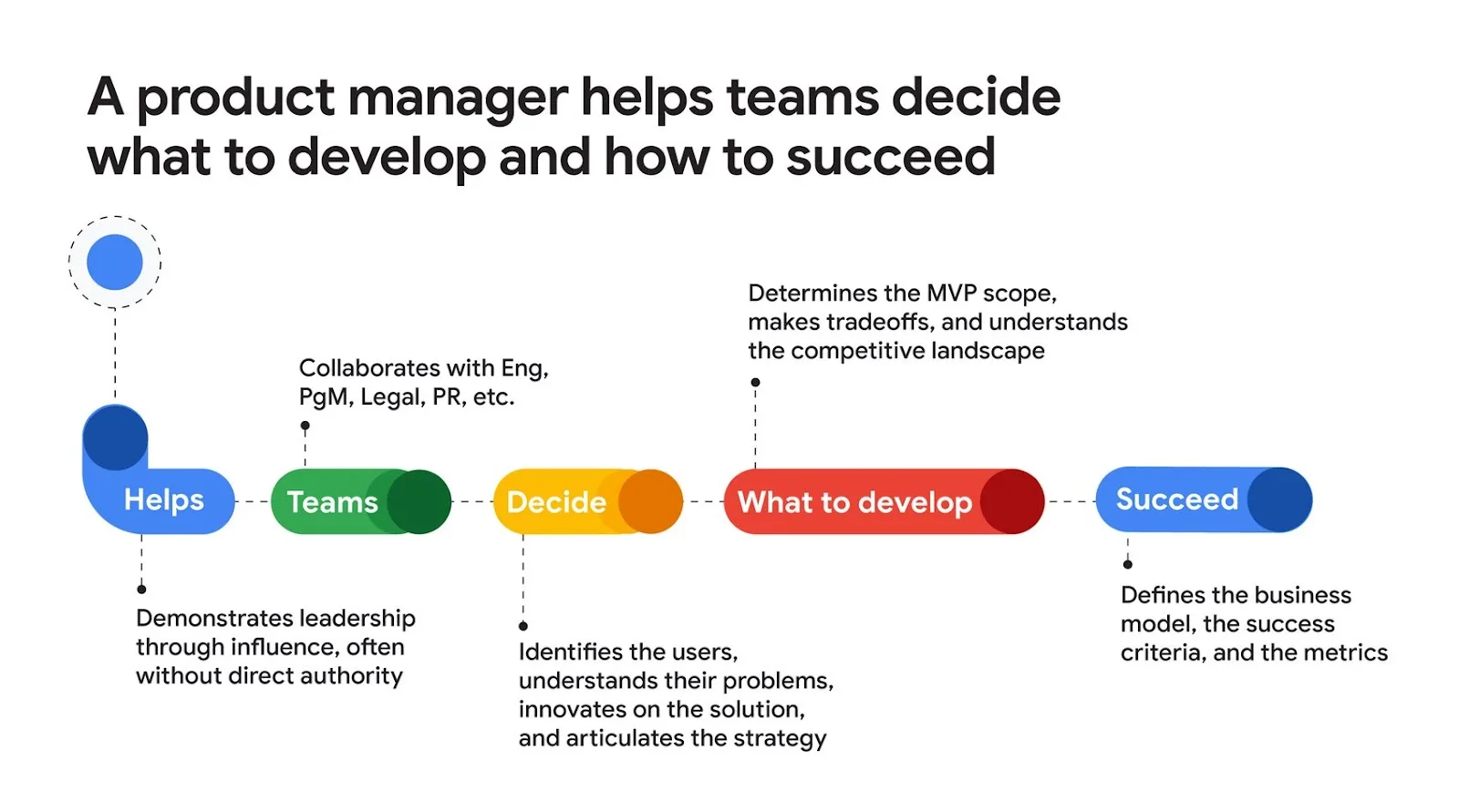
At Google, a Product Manager (PM) acts as the “glue” that holds together the various functions of a product’s lifecycle. Google views the PM role as a collaborative leader who combines business and technology and user experience skills, while other companies define it as the “CEO of the product.” You must decompose complex global issues into specific tasks, which will lead to development progress in this role. Your main responsibility is to create a user experience that combines the technical capabilities of Google with safe and innovative elements, whether you work on a new infrastructure system or improve a billion-user feature. Here are some of the tasks a Google PM is concerned with:
- Product Vision: The PM should have the ability to articulate a future state where complex technology seamlessly solves universal user needs, providing a clear, actionable roadmap for cross-functional execution.
- Strategy & Insights: The PM needs to assess market potential through examining market conditions, competitive threats, and pricing strategies and methods for business expansion.
- Analytical Rigor: The process involves using data to create estimates that help in problem-solving and determining achievement criteria.
- Execution & Trade-offs: The PM must choose which product features to develop and release based on existing resource availability.
- Cross-functional Leadership: The PM must build connections between engineers, designers, marketers and executives through their skill to lead without direct authority.
- Innovation and Culture: Showcasing humility, teamwork, tenacity, and mission association.
Top Google Product Manager Interview Questions
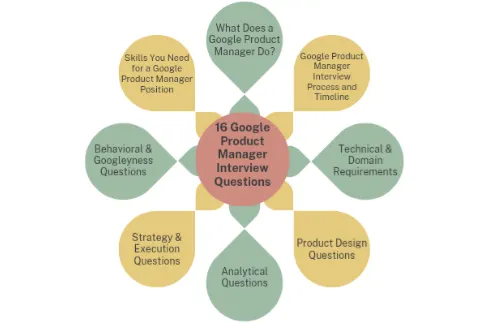
The most essential Google product manager interview questions have been divided into four primary categories: Product Design, Analytical, Strategy & Execution, and Behavioral. This evaluates three distinct professional attributes, which each assessment category tests.
Google seeks candidates who can accomplish backlog management, but they need “Product Visionaries” who understand the needs of billions of users, “Data Scientists” who can extract knowledge from uncertain situations, and “Humble Leaders” who handle complex social relations in an international technology organization. By practicing these specific questions, you will learn to frame your thoughts using Google’s preferred mental models, which will make your answers correct, but also present them in the structured way that hiring committees need.
1. Product Design Questions
The assessment measures a candidate’s capability to comprehend users, define problems, and design creative solutions.
Q1. What enhancements do you recommend for Google Search to assist first-time internet users from developing regions?
Q2. Create a Google Maps feature that enables tourists to find undiscovered local attractions.
Q3. Identify your preferred Google product and explain your proposed enhancements for it.
Q4. Create a smartwatch application that enables elderly users to maintain communication with their family members.
Q5. Design an experience for people who are booking flights and travelling for the first time. How would you improve the flying experience?
Q6. Google has invented the first quantum computer. How would you productize it?
Q7. How would you improve Google Calendar for remote teams?
Q8. Which Google product will you improve, and which will you cancel?
Q9. Choose a phone app that you use daily and identify 3 features you would improve or build from scratch.
What Interviewers Expect: Product Design & Sense
The interviewers evaluate candidates through their product sense ability, which assesses their capacity to create user-focused solutions from undefined problems. The evaluation requires you to show user empathy by describing particular user “pain points” which represent the actual difficulties users experience while using the product. At Google, candidates must demonstrate 10x thinking because they want to assess your ability to create a “North Star” vision which connects advanced technology with user requirements, and you must show that your proposed user improvement represents a major advancement instead of a simple improvement.
2. Analytical Questions
The assessment checks three skills, which include structured reasoning, data fluency, and problem identification abilities.
Q10. Estimate how many emails are sent via Gmail per day globally.
Q11. Which metrics would you use to evaluate YouTube shorts’ performance?
Q12. How much did taxi rides increase or decrease worldwide during COVID-19?
Q13. The Google Docs platform experienced a 20% decline in usage during the previous week. What method do you use to research this issue?
Q14. Estimate the number of EV charging stations needed in Hyderabad by 2030.
Q15. What are the key metrics for an API in the cloud?
Q16. How would you measure metrics for BART?
Q17. Fred made a new ticketing system. How would you measure its success?
Q18. How many self-driving cars would be needed to transport every person in your city?
What Interviewers Expect: Analytical & Metric Sense
The interviewers require you to demonstrate structured reasoning skills, together with data handling abilities, instead of expecting you to produce the correct numerical solution. Your task requires you to transform an ambiguous executive problem into its fundamental parts through the process of using Gmail usage data to estimate global usage based on population, internet access, and different account types.
The interviewer need metric intuition because they must determine which data point constitutes the “North Star” metric that shows product health, while you should also present all data points and views of the product. The 20% Google Docs usage decline requires you to conduct a root-cause analysis through external factor investigation, technical bug examination and segment behavior assessment to demonstrate your capacity to solve complicated problems through structured data analysis methods.
3. Strategy & Execution Questions
These tests assess business thinking abilities and prioritization skills and launch decision-making competencies.
Q19. How would you double YouTube’s paying subscriber base in 2 years?
Q20. Choose which AI feature you will release in Gmail. What steps will you take to determine the order of your launch?
Q21. Introduce a new feature, but you see a 40% decrease in usage on the first day. What steps will you take?
Q22. Imagine you’re the CPO of Zoom, facing heavy competition. What would you do?
Q23. Should Google be a StubHub competitor?
Q24. How would you create revenue streams from Google Keep without damaging the user experience?
Q25. Suppose you are a PM at Apple. What would you do to regain the market share?
What Interviewers Expect: Strategy & Execution
The interview process assesses three essential skills which include business acumen and prioritization mastery and high-stakes decision-making under pressure which constitute the main requirements for success as a Google PM.
Your task requires you to demonstrate the RICE framework which measures Reach Impact Confidence and Effort to explain your decision to choose one Gmail AI feature from multiple options based on scoring criteria which include massive reach for billions of users and high impact on engagement which shows a 20% uplift potential and strong confidence from pilots and low effort via existing ML infrastructure.
The 40% usage drop after product launch requires your ability to remain composed while handling data-based assessment which includes fast identification of system problems and demand changes through A/B rollback and user behavior assessment via surveys and emergency meetings with all teams present to transform failures into situations which build trust. The organization sets challenging targets which require us to increase YouTube subscriptions by two times because they want to assess our ability to grow through three strategies which include personalized bundles for retention and influencer partnerships for acquisition and tiered premium products for monetization while our main performance indicators assist us in maintaining ecosystem health.
The organization requires thinkers who possess both visionary skills and practical abilities to create business strategies which generate revenue through options like Keep ads via opt-in insights while maintaining user experience integrity between these two elements. The user stories function as trade-off evaluation tools which enable you to reach your goals effectively.
4. Behavioral & Googleyness Questions
These questions assess leadership abilities and collaborative skills and ability to handle stress and their core values.
Q26. Explain your process for resolving conflicts with engineers when you disagreed on product decisions.
Q27. Tell me about a time you used data to make a decision.
Q28. Why did you choose the Google product manager role? What makes this role unique?
Q29. Describe a project you managed from start to finish, including any project management tools and communication tactics you used to keep stakeholders involved.
Q30. How would you manage through a latent field failure or bug that is directly impacting customers and driving return rates up or support contacts?
Q31. Explain your leadership of a project which progressed from its initial development stage to its final implementation stage. What was the impact of your work on that project?
Q32. Share your experience of failure. What lessons did you take away from it?
Q33. Describe a time when you had a cross-functional challenge on a project. How did you manage it?
Q34. What makes Google your preferred choice instead of Meta and Microsoft?
What Interviewers Expect: Behavioral & Googleyness
Google interviewers evaluate candidates through Googleyness which combines three specific traits: intellectual humility, comfort with ambiguity, and dedication to team success. Candidate must demonstrate the ability to handle high-stress situations with engineers through the STAR method. This method requires to showcase ability to handle high-stress situations by using data and shared goals instead of personal differences.
The assessment process requires candidates to demonstrate self-awareness with their capacity to transform failures into valuable educational experiences. The assessment includes testing inclusive leadership skills which enable leaders to guide large teams across different functions while creating outcomes without using official power.
Google Product Manager Interview Process and Timeline
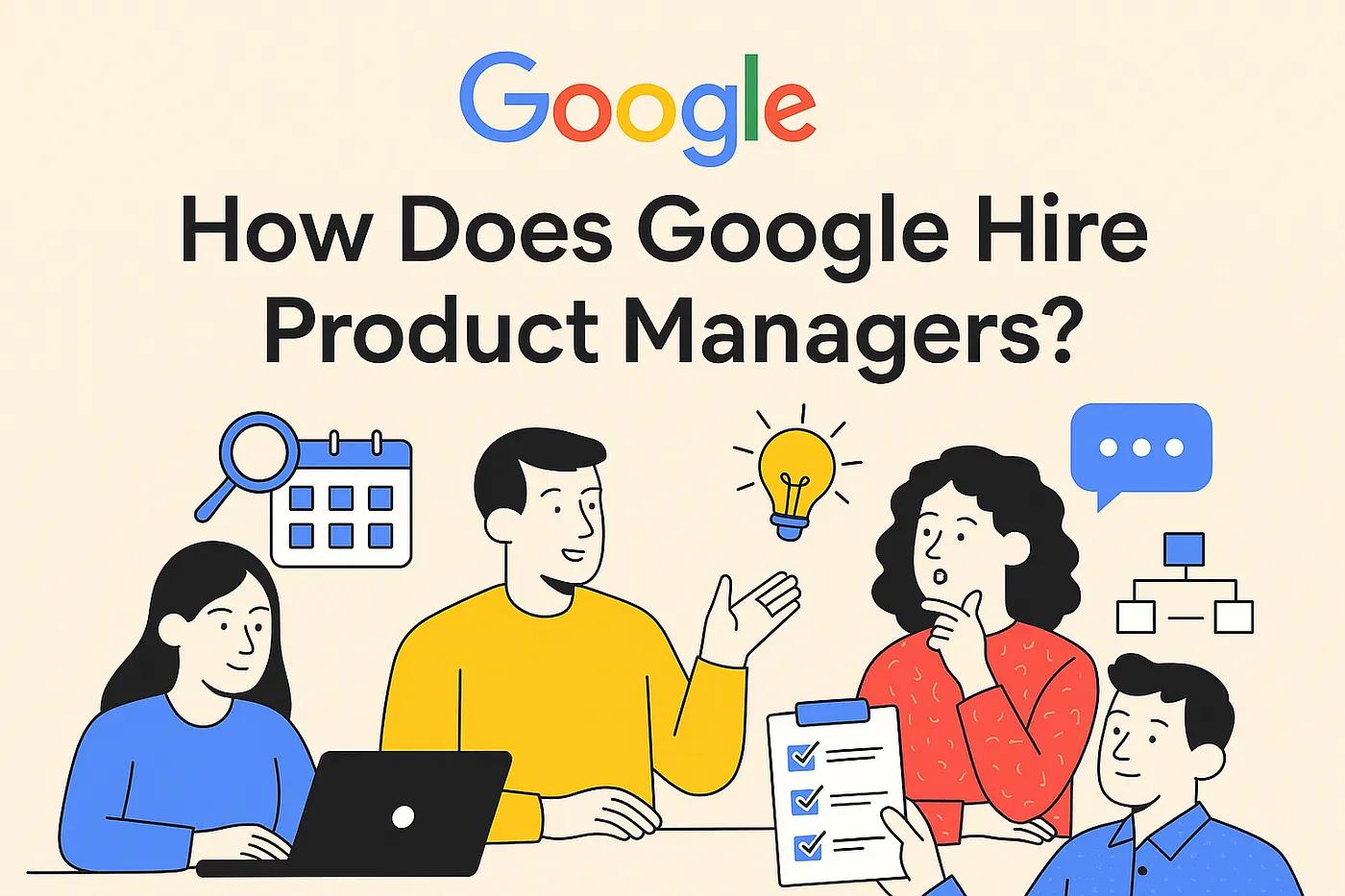
Google when hiring product managers assess candidates on two core requirements which include their ability to create outstanding products and their compatibility with the company culture. The interview process goes on for four to eight weeks to finish the process.
Typical stages of interview include:
- Resume & Referral Screen: Recruiters assess impact, scale, and relevance
- Recruiter Call (20 to 30 min): Background, motivations, team preferences
- PM Phone Screen (45 min): Product design or analytical question with follow-ups
- Onsite Loop (4 to 6 interviews, 45 min each): Mixed question types across all competencies
- Hiring Committee Review: Consolidated feedback plus resume packet reviewed
- Offer & Team Matching: Compensation finalized; team fit discussed
Technical & Domain Requirements
The candidate requirements for a Google Product Manager or a specialized infrastructure position require applicants to demonstrate both technical capabilities and professional skills which exceed basic product management standards.
- Core Experience & Education: The educational requirement mandates candidates to possess a technical or business-related degree, which needs to be equivalent to their actual work experience. The typical Google requirement for product management at mid-level includes a combination of five years and a professional background in product management or related technical positions, which includes software engineering and technical program management.
- “0 to 1” Execution Mastery: Candidates must prove they have taken products from initial conception to global launch. The process begins with early-stage ideation which defines the MVP (Minimum Viable Product) and continues through post-launch iteration after complete execution of production.
- Technical Infrastructure Fluency: For infrastructure and platform roles, you must be comfortable discussing Machine Learning (ML) models, detection systems, and Large Language Models (LLMs). The product trade-offs require an understanding of API architecture, database systems, and platform-level scalability systems.
- Trust, Safety, and Compliance: A modern PM stands at the intersection between policy development and product management. The organization needs to establish strict safety requirements that must be followed for all operations while using advanced systems to safeguard user information without interrupting the process.
- Cross-Functional Influence: Product Managers are expected to drive massive initiatives that involve multiple stakeholder, policy developers, legal teams, operations, and diverse engineering squads. The ability to lead without authority and communicate a clear vision to executive leadership is a non-negotiable skill.
Skills You Need for a Google Product Manager Position
Success at Google requires you to develop expertise in both technical competencies and advanced interpersonal skills. Google PMs need to possess more than basic project management skills because their work requires them to connect two things that involve extensive computing resources and various user requirements. The ability to “speak engineer” lets you handle intricate system designs while your empathy skills help you create products that serve one billion users. The Google ecosystem defines a successful candidate through their ability to analyze information at an advanced level while simultaneously managing multiple teams that report to different authorities. Here are the following skills Google looks for in a Product Manager:
- Analytical Fluency: People demonstrate comfort when they work with estimation methods, metrics, A/B testing, and the process of identifying root causes.
- Strategic Thinking: The ability to conduct market research and evaluate competitors enables businesses to create monetization strategies.
- Execution Excellence: The RICE and ICE prioritization frameworks together with launch planning and risk mitigation methods enable execution of projects.
- Communication & Influence: The ability to tell stories enables people to connect with others while resolving conflicts and aligning with stakeholders.
- Googleyness: The quality of having humility together with a strong tendency to take action and handle uncertain situations and work toward the company’s mission.
Conclusion
The process of obtaining a PM position at Google presents extreme challenges yet brings exceptional benefits. You will develop products that billions of users will access through your collaboration with top engineers and designers. Successful performance needs more than correct answer recall.
The process requires users to think in organized ways while they develop creative solutions and judge business matters. Your chances of standing out from other candidates will increase through your mastery of listed Google Product Manager interview questions and your study of Google’s six evaluation areas, which include product vision, strategic insights and product analysis, problem space, and execute with judgment, behavioral evaluation.
FAQs: Google Product Manager Interview Questions
Q1. Do I need a technical background to be a PM at Google?
While a Computer Science degree is no longer a strict requirement for all PM roles, “Technical Fluency” is essential. You must be able to hold your own in high-level architectural discussions. This includes understanding System Design (scalability, load balancing, and latency), API functionality, and Data Modeling. Google expects PMs to partner effectively with engineers to make informed trade-offs between product features and technical constraints.
Q2. What distinguishes Google from Meta in the PM interview process?
The primary difference lies in the structure and focus. Meta typically uses highly standardized, 45-minute “Product Sense” and “Execution/Metrics” sessions with a heavy emphasis on their specific frameworks. Google’s process is more varied and often includes dedicated Analytical/Estimation rounds and a specific “Googleyness & Leadership” interview. Google also tends to test “Moonshot Thinking” looking for solutions that are 10x better, rather than just incremental improvements.
Q3. How long should I prepare?
Most successful candidates spend 2 to 6 months preparing. If you are already familiar with PM frameworks (like CIRCLES or BUS), 1 to 3 months of intensive mock interviewing is usually sufficient. The goal is to move past “memorizing frameworks” to a point where your structured thinking feels natural and conversational.
Q4. Do estimation questions still appear in interviews?
Yes. While some companies have moved away from them, Google still uses estimation and “Fermi problems” to assess your quantitative intuition and ability to handle ambiguity. They aren’t looking for the “right” number, but rather your ability to break a massive global problem into small, logical, and defensible assumptions.
Q5. How important is “Googleyness”?
It is a “hard-pass” criterion. Google places immense value on intellectual humility, comfort with ambiguity, and a collaborative spirit. Even a candidate with brilliant product ideas will be rejected if they come across as arrogant or unable to influence a team without formal authority. Your behavioral stories must demonstrate that you prioritize the mission and the user over personal ego.
Q6. Does Google hire PMs for specific products during the interview?
Generally, no. Google often uses a “Generalist” hiring model. You are interviewed for the PM role at a specific level (e.g., PM II or L5), and once you pass the “Hiring Committee” (HC), you go through a Team Matching phase. This is where you talk to different product leads (like Search, Maps, or Cloud) to find the best fit for your skills and interests.
Q7. How do “Estimation” questions differ from “Metrics” questions?
Estimation (Fermi problems) tests your ability to build a mathematical model from scratch using logical assumptions (e.g., “Estimate the number of Gmail users in India”). Metrics questions test your business judgment (e.g., “What is the most important metric for Google Photos?”). Both require a structured, step-by-step breakdown rather than a quick, “gut-feeling” answer.
References
Recommended Reads:


