Article written by Nahush Gowda under the guidance of Thomas Gilmour, Ex-LinkedIn and PayPal leader turned engineering coach, mentoring 100+ engineers into FAANG+ roles. Reviewed by Mrudang Vora, an engineering leader and former CTO specializing in digital innovation, product development, and tech-driven business growth.
Engineering leadership has become one of the most sought-after qualities in the modern tech world. As technology evolves at lightning speed, companies need more than brilliant engineers who can solve technical problems. Businesses need leaders who can guide teams, align engineering work with business priorities, and foster innovation in uncertain environments.
Unlike traditional management, engineering leadership is about setting a vision, inspiring people, and creating an environment where engineers can do their best work. Great engineering leaders are the ones who can balance technical credibility with empathy, strategy with execution, and long-term direction with day-to-day problem-solving.
In this article, you will understand what engineering leadership is, how it differs from management, the skills that define successful leaders, the common pitfalls to avoid, and the pathways to building your own leadership journey.
What Is Engineering Leadership? Understanding the Role
Engineering leadership is often described in different ways depending on the company, industry, or even team size. But at its core, it’s the practice of combining technical expertise, people skills, and strategic thinking to drive meaningful outcomes.
Unlike roles that are purely technical or purely managerial, engineering leadership lives at the intersection. A leader in this space:
- Understands technology deeply enough to earn the trust of engineers.
- Communicates effectively with stakeholders who may not have a technical background.
- Bridges the gap between organizational goals and day-to-day technical execution.
Key Dimensions of Engineering Leadership
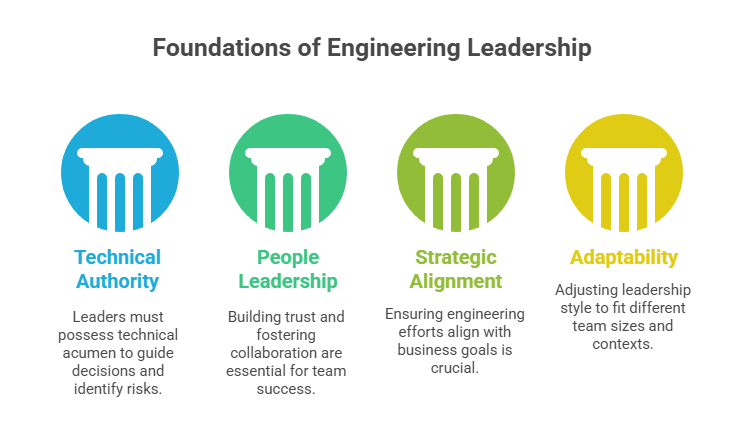
Technical Authority
Leaders don’t need to code every day, but they should be capable of asking the right questions, spotting risks, and guiding technical decisions.
People Leadership
Building trust, creating psychological safety, mentoring engineers, and fostering collaboration are all hallmarks of effective leadership.
Strategic Alignment
Leaders connect the dots between business goals and engineering efforts. They ensure teams aren’t just “shipping code” but are solving the right problems in the right way.
Adaptability
The definition of good leadership evolves with context. Leading a 5-person startup team requires different skills than leading a global engineering organization of 500. The best leaders adjust their style to fit the environment.
Why the Definition Matters
Because engineering leadership is so broad, it can feel vague or ambiguous. But having clarity on what it means helps aspiring leaders identify what to work on: whether it’s improving technical breadth, strengthening soft skills, or learning how to think strategically.
At its heart, engineering leadership is about turning complexity into clarity for both the people doing the work and the organization depending on them.
Engineering Leadership vs Engineering Management
One of the biggest sources of confusion in tech organizations is the difference between engineering leadership and engineering management. The two overlap in many ways, but they serve different purposes. Understanding this distinction is essential for anyone aspiring to grow into leadership roles.
Engineering Leadership
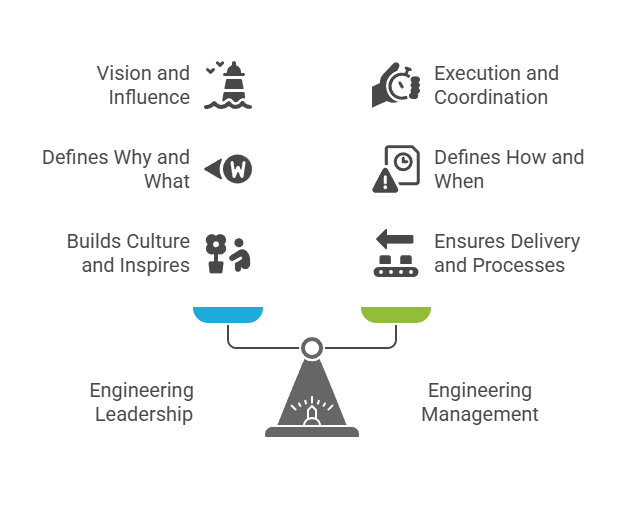
Engineering leadership is about vision and influence. It focuses on:
- Setting the “why” and “what” for teams.
- Creating a culture where engineers thrive and innovate.
- Inspiring people to grow, take ownership, and deliver impactful work.
- Acting as a bridge between engineering execution and organizational strategy.
Leaders don’t just manage tasks, they also shape direction and outcomes. They ask: Are we working on the right problems? How do we motivate and empower engineers? How do we turn business goals into engineering solutions?
Engineering Management
Engineering management, on the other hand, is more execution-focused. Managers ensure that:
- Projects are scoped, scheduled, and delivered.
- Processes and workflows run smoothly.
- Resources like time, budget, and people are allocated effectively.
- Performance is tracked and reported.
Where leadership is about influence, management is about administration and coordination. Most engineering roles involve a mix of both. A manager often leads, and a leader often manages. But the balance shifts depending on the role:
- Tech Leads lean heavily on leadership, guiding through technical credibility and influence.
- Engineering Managers balance leadership with people and project management.
- Directors and VPs operate at higher levels of leadership, setting vision across teams, while delegating much of the execution.
Also Read: A Comprehensive Guide to the Engineering Manager Role
Why Engineering Leadership Matters
Without strong leadership, even the most talented engineering teams can lose direction, fall behind deadlines, or burn out. With the right leadership, those same teams can become engines of innovation and long-term growth.
In this environment, engineering leadership has evolved far beyond the old assumption that the “best engineer” automatically makes the best leader. Technical know-how alone isn’t enough. What modern teams need are leaders who can blend technical expertise with commercial awareness and people skills to create sustainable success.
The Three Dimensions of Effective Leadership
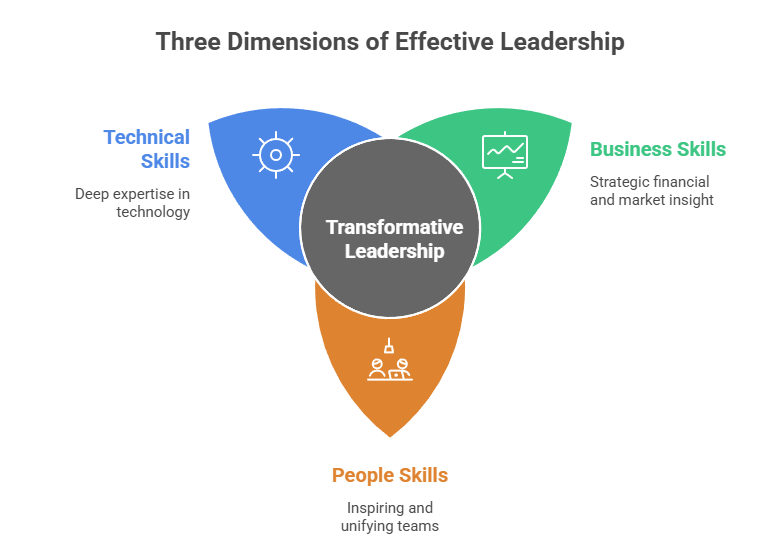
Technical Skills
Strong leaders understand technology deeply, but more importantly, they know how to connect that expertise to bigger challenges.
They can move across disciplines, adapt quickly, and collaborate with other departments to solve problems at scale. It’s about applying that knowledge to guide the right decisions.
Business Skills
Engineering decisions are never made in a vacuum. Leaders must understand the financial and strategic impact of their teams’ work. That means considering profit and loss, assessing the value added by engineering initiatives, and maximizing returns on projects.
Leaders who grasp these dynamics ensure their teams are not just building great technology but also driving the business forward.
People Skills
Perhaps the most overlooked, yet most critical, dimension is the ability to lead people. Inspiring growth, managing differences, and creating a culture where diverse voices thrive are what allow teams to consistently deliver.
In a hybrid, global workforce, this means understanding cultural nuances, building trust across distances, and keeping people connected to a shared mission.
Many leaders excel in one or two of these areas, but few master all three. That’s why true engineering leadership is rare and so valuable. A leader who balances technical credibility, business acumen, and people-first thinking doesn’t just manage projects.
They build resilient, innovative teams that can adapt, grow, and stay competitive no matter how fast the landscape shifts.
Leadership in engineering matters because it combines technical, business, and people skills—without all three, teams struggle to adapt and organizations risk falling behind.
Core Skills & Qualities of Effective Engineering Leaders
Engineering leaders succeed not just because they’re technically skilled, but because they combine expertise with the ability to inspire, guide, and adapt. Here are the core skills and qualities that define them.
A leader doesn’t need to be the best coder in the room, but they must understand the technical landscape well enough to:
- Earn the respect of their teams.
- Spot risks and evaluate trade-offs.
- Ask the right questions during decision-making.
This credibility builds trust, and engineers are more likely to follow leaders who “get it” at a technical level.
Equally important is communication. Leaders act as translators between engineering and the rest of the organization. They simplify complexity for stakeholders, keep teams aligned on priorities, and most importantly, listen. When communication is clear and two-way, teams avoid misalignment and wasted effort.
Another often overlooked quality is emotional intelligence. Leading engineers means dealing with diverse personalities, stress, and sometimes conflict. Leaders who can read the room, defuse tension, and motivate people in tough times create environments where individuals feel safe to contribute their best ideas.

Good leaders also bring vision and strategic thinking. They don’t just ask, “How do we build this feature?” but instead, “Why are we building it, and what impact will it have?” They connect the dots between engineering efforts and business goals so the team sees the bigger picture.
Of course, technology doesn’t stand still. That’s why adaptability is critical. Whether it’s integrating AI tools, managing hybrid teams, or responding to shifting priorities, strong leaders know when to pivot and adjust their approach without losing sight of the mission.
The best leaders grow other leaders. They:
- Invest time in mentoring individuals.
- Create opportunities for people to stretch and develop.
- Celebrate achievements to reinforce growth and confidence.
Engineering leaders succeed when they combine technical credibility with strong communication, emotional intelligence, vision, adaptability, and a commitment to building inclusive, growth-oriented teams.
Roadmap to Becoming an Engineering Leader
Nobody wakes up one morning and suddenly becomes an engineering leader. It’s a journey, often a gradual one, that starts with personal growth and expands into guiding others. While the path isn’t identical for everyone, some common stages and strategies can help aspiring leaders find their way.
Start with Self-Leadership
The first step is learning to lead yourself. This means building discipline, taking ownership of your work, and developing self-awareness.
Engineers who consistently deliver high-quality work, communicate effectively, and show initiative naturally position themselves as informal leaders, even before they have a title.
Develop a Broader Skill Set
As you grow, leadership demands skills that go beyond writing great code or designing solid systems. You’ll need to learn how to:
- Influence decisions without formal authority.
- Communicate clearly with both technical and non-technical audiences.
- Think strategically about long-term goals instead of just immediate tasks.
Many engineers start to stretch these muscles when they step into roles like tech lead, where they’re expected to mentor others and guide technical direction while still contributing as an individual.
Seek Out Mentorship and Feedback
Strong leaders rarely grow in isolation. Mentorship, whether formal or informal, plays a huge role in shaping leadership style. Finding someone who’s already walked the path can help you see blind spots, avoid common pitfalls, and accelerate growth. Likewise, asking for honest feedback from peers and managers helps you refine your approach.
Step Into Formal Leadership Roles
Over time, opportunities arise to move from informal leadership into formal management or higher-level leadership positions. This might mean managing a small team, owning the delivery of a project, or setting a vision for multiple teams. Each step up the ladder comes with new challenges:
- Moving from individual contributor to tech lead means shifting from “my work” to “our work.”
- Transitioning from tech lead to manager requires balancing people management, delivery, and technical guidance.
- Advancing to director or VP-level means letting go of day-to-day technical details and focusing on organizational strategy and culture.
Commit to Continuous Learning
Technology evolves quickly, and so do leadership practices. Whether it’s staying on top of new tools, learning about organizational psychology, or studying different leadership styles, the best leaders treat learning as a lifelong process.
The path to engineering leadership starts with self-leadership, expands through skill-building and mentorship, and grows into formal roles that demand adaptability, vision, and continuous learning.
Also Read: Engineering Leadership Skills in 2025: Transitioning From IC to Leadership
Challenges & Pitfalls in Engineering Leadership
Stepping into engineering leadership is exciting, but it’s not without hurdles. Many new leaders discover that the skills that made them great engineers aren’t enough to carry them through the demands of leadership.
Understanding the common pitfalls can help you prepare and avoid costly mistakes.
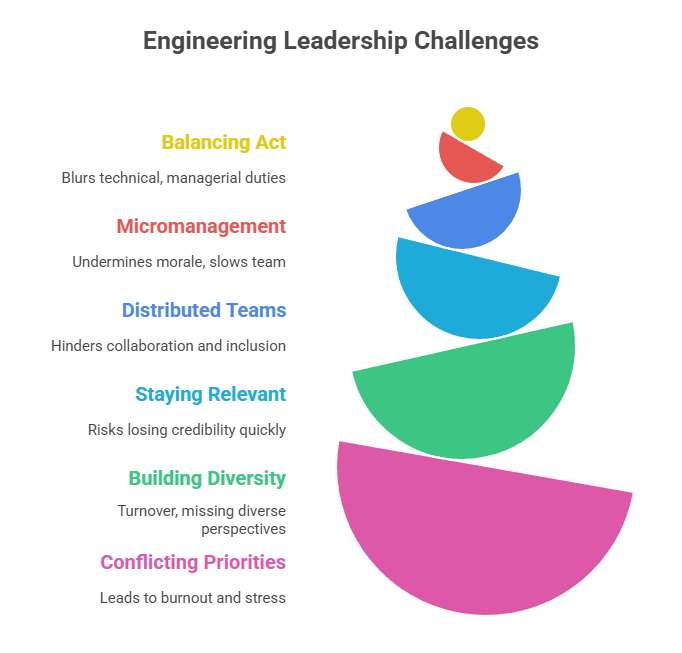
Balancing Technical and Managerial Work
One of the first struggles for new leaders is letting go of hands-on technical work. It’s tempting to keep coding or diving into architecture decisions, but leadership requires shifting focus.
The challenge is finding the right balance. Engineering leaders must be technically credible while giving enough time to people, strategy, and delivery. Leaders who can’t make this transition risk either micromanaging or losing touch with their team’s work.
Avoiding Micromanagement
Trust is at the core of effective leadership. New leaders often feel pressure to control every detail, especially when deadlines are tight. But micromanagement undermines morale and slows teams down. The better approach is setting clear goals, giving context, and empowering engineers to figure out the “how.”
Leading Distributed and Hybrid Teams
Modern engineering rarely happens in the same office. Teams are spread across cities, time zones, and even continents. Leaders need to adapt by building inclusive, flexible systems for collaboration. This means being mindful of cultural differences, over-communicating when needed, and finding ways to maintain connection despite distance.
Staying Relevant in a Fast-Changing Field
Technology evolves faster than any single person can keep up with. Leaders who cling to outdated practices risk losing credibility. On the flip side, spending all your time chasing the latest trends distracts from building a long-term vision.
The key is balance: stay informed enough to guide smart decisions, but focus on timeless leadership principles.
Building and Sustaining Diversity
Diversity has become a key driver of innovation, but it doesn’t happen automatically. Leaders must create inclusive cultures where all engineers feel valued and supported.
Without that effort, teams risk high turnover, especially among underrepresented groups, and miss out on the benefits of diverse perspectives.
Navigating Conflicting Priorities
Engineering leaders sit at the intersection of technology, business, and people. This means they’re often pulled in different directions, like shipping features quickly, maintaining quality, and keeping teams healthy.
The pitfall here is saying yes to everything, leading to burnout. Strong leaders learn how to prioritize and push back when necessary.
Conclusion
Engineering leadership is what transforms technical work into real impact. It goes beyond managing projects. It’s about setting vision, empowering people, and aligning engineering with business goals.
For aspiring leaders, the journey starts with self-leadership and grows through communication, adaptability, and inclusivity. In the end, effective engineering leadership is about enabling teams to innovate, grow, and deliver lasting value.
Step Into Engineering Leadership With Confidence
Moving from senior engineer to engineering manager is about learning how to guide teams, shape technical direction, and deliver at scale. This masterclass is built to help you make that leap with confidence.
You’ll learn the foundations of leadership, how to navigate real-world challenges, and how to prepare for tough FAANG+ management interviews. With JD Kilby’s experience leading teams at Amazon and beyond, you’ll get practical strategies you can apply right away. If leadership is the next step in your career, this is where to start.
FAQs
1. What is the meaning of engineering leadership?
Engineering leadership means guiding teams with vision, influence, and strategy—creating culture, aligning engineering with business goals, and empowering engineers to deliver impactful solutions.
2. What do engineering leaders do?
Engineering leaders set direction, inspire innovation, mentor talent, build strong culture, and translate business needs into technical outcomes while motivating teams to excel.
3. Why is leadership important in engineering?
Leadership ensures teams solve the right problems, stay motivated, collaborate effectively, and deliver high-quality, scalable solutions that drive organizational success.
4. What are the three pillars of engineering?
The three pillars are technical excellence, effective communication, and leadership—balancing expertise with teamwork and vision to achieve sustainable engineering impact.
5. What is the difference between engineering leader and engineering manager?
An engineering leader focuses on vision, influence, and strategy, while an engineering manager emphasizes execution, processes, and coordination—leadership shapes direction, management ensures delivery.